
Since I was a child, I have always been enamored of the spaces and environments I have been in. This attention to detail and to how a space makes me feel has always intrigued me. When I heard of Interior Design, I knew that it was my calling.
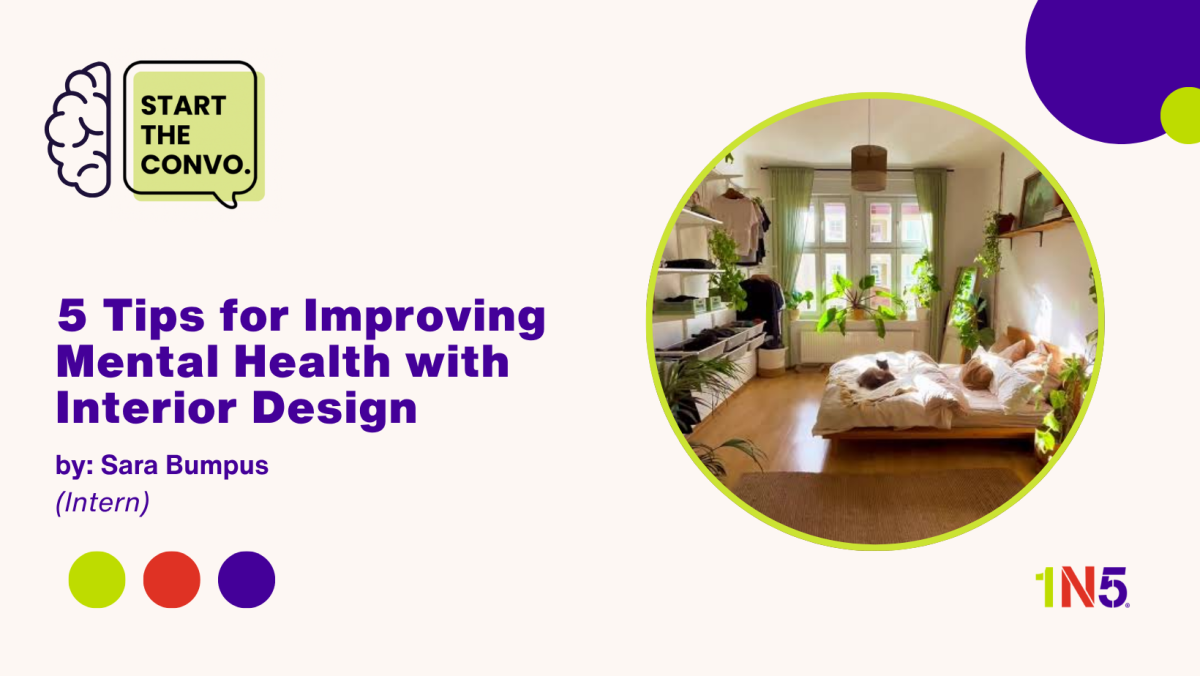
When I was fifteen, I started showing signs of depression and anxiety in my day-to-day life. During this time, I isolated myself in my room. I would destress and enjoy my time during this depressive period by redecorating and fully turning my space into my own personal diary. The walls were littered with posters of all my favorite artists and photos of my friends and family. My personal artwork is mixed into the space along with some hanging plants. There was an octagonal window that cast sunlight onto my bed. The colors were neutral, and the lighting was warm. I felt a comfort in understanding a space and fully turned the room into my sanctuary. My mental health would waiver in the space still, but my enjoyment of being in my room never faded. With my newfound knowledge from interior design classes, I hope to give some tips and tricks on how a space can impact and improve mental health.
1. Natural Sunlight
I know when I have been in my depressive episodes, I would always want to sleep all day and be in the darkness. I would purposefully draw my blinds and hide under the covers. It is scientifically proven that sunlight supports circadian rhythms, boosts serotonin, and reduces stress. I have personally found myself to be more productive when working in front of windows rather than facing a wall. In nature, the environment helps lower cortisol, restores attention span, and allows for better retention of information.
2. Color palette
Although personal preference is highly important, there are studies showing certain colors can help evoke emotions when in a space. For example, soft blues and greens can promote relaxation, lower stress, and improve focus, which is perfect for bedrooms and offices. Warm bold colors stimulate energy, happiness, and appetite, such as red, orange, and yellow. These could be highly effective in kitchens and dining rooms in order to make public spaces feel more stimulating. Neutral tones can provide balance, elegance, and clarity, and they can be very versatile in many spaces.
3. Organization
One part of my personal goals is working on my organization and cleaning habits. When going through mental health episodes, it can feel very daunting and overstimulating to clean your space. Fortunately, over the past couple of years, I have perfected a system that works for me. My room now consists of multiple storage and organization options. This allows me to relieve the clutter that has been in my space. I can tell a difference in my focus and sense of control when my place is clean and tidy. Some ideas of additional storage consist of bins to go under your bed, you need furniture to further hide clutter, and having a space for everything that you own. This allows me to know where everything is, as well as clean and put things away faster.
4. Biophilic Design
As I’ve mentioned before, nature is one of the best mental health remedies to improve moods. Incorporating plants, wood, stone, and greenery can help reduce blood pressure and connect you to nature. Within my recent studies, I have learned how important biophilia design is for spaces that may lack mentally stimulating environments. Since learning about that impact, I have gravitated towards going outside for short periods of time and reflecting, and incorporating greenery into my spaces.
5. Layout and Zones
Finally, the layout and zone of a space matter immensely. If a space is not functional, it can therefore disrupt a person’s mood and thought pattern. Separating spaces like work and leisure can allow the brain to transition seamlessly between tasks. In the past, I have been very lazy and did not want to get out of bed, which therefore had me doing work in my bed. I was never productive, and combining that with leisure and work was very negative for me. I saw myself thinking about work when I was in my bed, and in my bed, not thinking about work. If you separate these spaces and allow for separate zones for different areas of function, it can aid in creating a better mood and a better space.
I hope you’ve been able to take away some tips and tricks that can help improve mental health and the functionality of a space. Although I have struggled before I have taken time to self reflect and improve my day-to-day life, which has therefore improved my mental health. Loving your space can help you love yourself in your mind, which is why interior design truly does impact life.