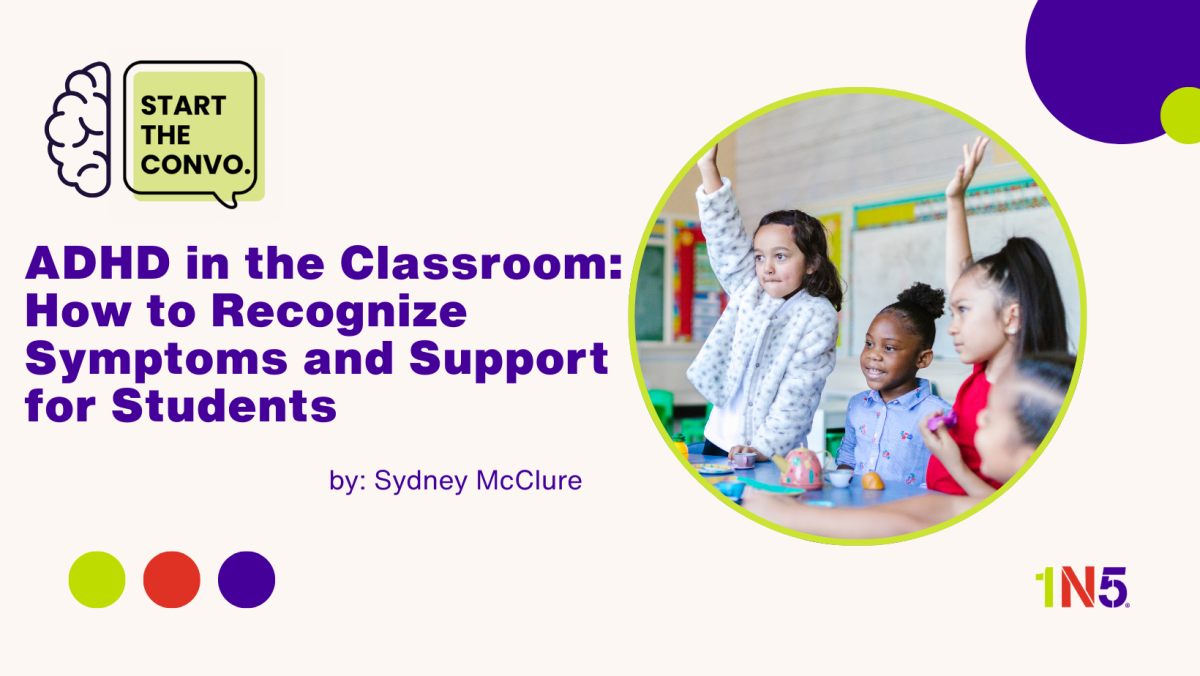
Fidgeting, constant chatter, disruptions, these are the tell-tale signs of Attention Deficit
Hyperactivity Disorder (ADHD) that educators have come to expect. But that’s only part
of the story. ADHD shows up in far more ways than most people realize.
ADHD is a condition that makes it hard for a person to focus, stay organized, and
control their impulses. The CDC found that 11%, or 7 million American children, and
6%, or 15.5 million U.S. adults, have ADHD. While awareness of and support for ADHD
have increased in the past decade, misconceptions about it persist.
The first step in supporting students with ADHD is recognizing that it shows up
differently in each person. It’s also important to remember that ADHD isn’t something
students can control; it’s part of who they are. This is why having a variety of classroom
support strategies is critical to helping them thrive. And, while ADHD presents
challenges, it can also be a strength. With the right support, students with ADHD can be
very successful. ADHD Manifests in the Classroom: Inattentive, Hyperactive-
Impulsive and Combined Types of ADHD look different in everyone, so understanding
the three main types can help us better support those affected. The National Education
Association highlights how ADHD typically presents in the classroom:
. Hyperactive-Impulsive: This type is the easiest to spot. Students may struggle
to sit still, frequently fidgeting, talking out of turn, blurting out answers, or
interrupting others. Their energy can sometimes feel overwhelming, but it’s
important to remember that these behaviors are part of how their brain works.
. Inattentive: This type is harder to recognize. Students may be quiet, but their
minds are elsewhere. They can seem distracted, forgetful, or disorganized. They
might miss important details in assignments, make careless mistakes, or have
difficulty completing tasks. These students are often misunderstood because
their struggles are less obvious.
. Combined Presentation: This is a mix of both hyperactive-impulsive and
inattentive traits. It can be harder to pinpoint because these students exhibit
behaviors of both types.
ADHD in Girls vs. Boys: Why Symptoms Can Look So Different ADHD often
looks different in males and females. In boys, it tends to present outwardly,
with behaviors that are easy to see, while in girls, symptoms are often
internalized and less visible. Part of the challenge is that ADHD was originally defined
based on the behaviors of hyperactive boys, and a lot of the current assessment criteria
still focus on these outward signs. While research suggests that ADHD symptoms are
similar across genders, the lived experience of girls tells a different story. Because they
internalize their feelings and try to mask their symptoms, ADHD in women and girls is
hard to spot or misunderstood. ADHD Is Not a Choice: Understanding Strengths and
Misconceptions. “There are a lot of people, including those in education, who think that
kids who have ADHD can control it, or that they are acting out on purpose,” teacher
Martha Patterson told the News Today. “Even if a student has a 504 or an IEP, some
still think they can control it. They can certainly manage their ADHD with therapies,
accommodations, and medications, but their behaviors are symptoms, not choices.”
Another common myth is that ADHD is a deficit, not a difference. In reality, there
are many highly successful people with ADHD. Think of Bill Gates, Simone Biles,
and Albert Einstein, each harnessed traits like hyper-focus, passion, creativity,
determination, risk-taking, and optimism to reach the top of their fields. ADHD
can even be an advantage in certain careers, including entrepreneurship, acting,
music, or athletics, where unique energy and imagination are assets. ADHD
Classroom Strategies: How to Help Students Focus and Succeed. Over the years,
educators have learned many effective ways to support students with ADHD.
For younger learners, News Today recommends:
. Seat the class strategically. Place students with ADHD near the teacher and away
from distractions like windows or hallways.
. Establish routines and repeat reminders. A predictable schedule helps students
know what to expect, while gentle reminders keep their minds on task.
. Take frequent breaks. This helps diffuse frustration and gives students a chance
to refocus.
. Use auditory cues to note a change in the lesson. Signals, like chimes or verbal
prompts, provide structure, improve concentration, and help sensory regulation.
. Break assignments into smaller parts. Smaller, manageable tasks with extra
time reduce anxiety and make it easier for students to complete work.
At the college level, Duke University hits on the importance of managing information and communications consistently:
. Send reminders for upcoming assignments.
. Create a course calendar with clear due dates.
. Keep course materials in a single, organized location.
. Record lectures so students can revisit anything they missed.
. Provide guiding questions to help students engage with reading materials effectively.
Supporting students with ADHD isn’t just about structure; it’s about providing
understanding and flexibility. With the right strategies, students can thrive academically
while building confidence.