
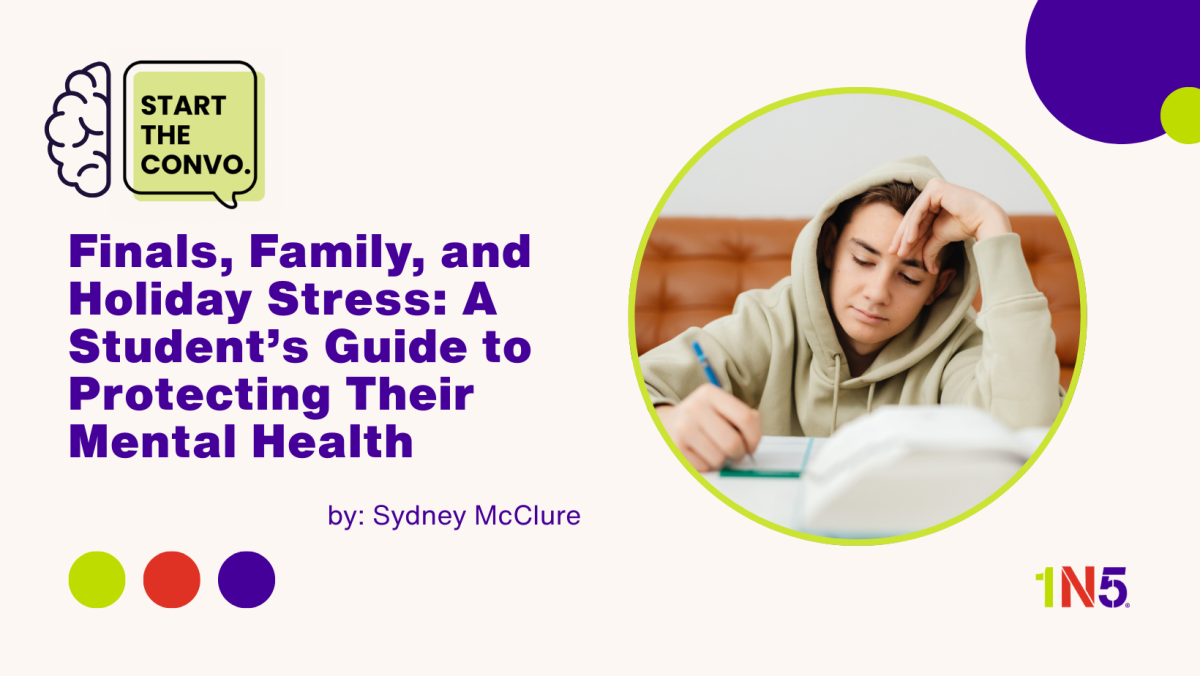
We often think of the holidays as a season of joy, but for many of us, they’re also
stressful. On top of our already packed to-do lists, we’re juggling a full calendar of
celebrations, the pressure to find perfect gifts (and the financial strain that comes with
them), and the emotional complexity of family gatherings. It’s no wonder that
The American Psychological Association found that 89% U.S. adults feel anxious during the
holidays, citing worries about money, missing loved ones, and anticipating family conflict.
stressful. On top of our already packed to-do lists, we’re juggling a full calendar of
celebrations, the pressure to find perfect gifts (and the financial strain that comes with
them), and the emotional complexity of family gatherings. It’s no wonder that
The American Psychological Association found that 89% U.S. adults feel anxious during the
holidays, citing worries about money, missing loved ones, and anticipating family conflict.
For college students, the pressure is even more intense. Finals collide with travel plans,
shifting routines, and the emotional transition of heading home. With so many stressors
hitting at once, it’s critical to have dependable coping strategies to survive finals and
navigate the holidays with family.
shifting routines, and the emotional transition of heading home. With so many stressors
hitting at once, it’s critical to have dependable coping strategies to survive finals and
navigate the holidays with family.
Finals Week Survival Guide: How to Stay Focused and Reduce Stress
Finals week is an onslaught of tests, papers, and presentations all demanding our
attention at once. Boston University psychologist Cong Zhang notes, “A lot of times
emotions can get so overwhelming that we feel like they’re preventing us from doing the
thing we want to do, like focusing on that paper that’s due on Monday. Emotion
regulation skills are really helpful when we are looking to calm our body down and stay
focused.” She offers several strategies to support your mental well-being and tackle
finals with confidence:
Finals week is an onslaught of tests, papers, and presentations all demanding our
attention at once. Boston University psychologist Cong Zhang notes, “A lot of times
emotions can get so overwhelming that we feel like they’re preventing us from doing the
thing we want to do, like focusing on that paper that’s due on Monday. Emotion
regulation skills are really helpful when we are looking to calm our body down and stay
focused.” She offers several strategies to support your mental well-being and tackle
finals with confidence:
. Be Aware of How You Feel and Take Care of Yourself
Checking in with yourself physically and emotionally is foundational to managing
your wellness during this time of year. Under stress, people often overlook the
habits that quietly make them feel worse, like skipping meals to squeeze in more
study time or sacrificing sleep in a late-night study session. To the extent
possible, try to get enough sleep and have regular, balanced meals. These basic
habits do more for your focus and resilience than you realise.
Checking in with yourself physically and emotionally is foundational to managing
your wellness during this time of year. Under stress, people often overlook the
habits that quietly make them feel worse, like skipping meals to squeeze in more
study time or sacrificing sleep in a late-night study session. To the extent
possible, try to get enough sleep and have regular, balanced meals. These basic
habits do more for your focus and resilience than you realise.
. Take Time to Reset
When deadlines stack up, your instinct may be to power through, but taking a
A moment to reset your nervous system can make your study time more effective.
Engaging all five senses, stepping outside for a short walk, or practising deep
breathing can help calm the body and bring you back to the present moment. If
anxiety spikes, a positive mantra can interrupt the spiral and help re-centre you.
When deadlines stack up, your instinct may be to power through, but taking a
A moment to reset your nervous system can make your study time more effective.
Engaging all five senses, stepping outside for a short walk, or practising deep
breathing can help calm the body and bring you back to the present moment. If
anxiety spikes, a positive mantra can interrupt the spiral and help re-centre you.
. You Are Not Your Stress:
Anxiety has a way of convincing you that it defines who you are and that it will
always block your way to success. In those moments, it helps to remind yourself.
Anxiety has a way of convincing you that it defines who you are and that it will
always block your way to success. In those moments, it helps to remind yourself.
. that anxious thoughts are just that: thoughts. By distancing yourself and
observing your thoughts, you take away their power. Practicing self-compassion
can also shift our inner dialogue. If you wouldn’t speak to a friend the way you’re
speaking to yourself, it’s a sign that you deserve more kindness, not criticism.
observing your thoughts, you take away their power. Practicing self-compassion
can also shift our inner dialogue. If you wouldn’t speak to a friend the way you’re
speaking to yourself, it’s a sign that you deserve more kindness, not criticism.
. Organize, Prioritize, and Break Down Big Tasks
Laying out finals-week deadlines in a planner or spreadsheet can help you see
everything in one place and make it easier to decide where to start. Once the big
picture feels clearer, try breaking large, overwhelming assignments into smaller,
doable steps. This approach not only makes the work feel more manageable, but
it can also help you get unstuck when a task feels too big to begin.
Laying out finals-week deadlines in a planner or spreadsheet can help you see
everything in one place and make it easier to decide where to start. Once the big
picture feels clearer, try breaking large, overwhelming assignments into smaller,
doable steps. This approach not only makes the work feel more manageable, but
it can also help you get unstuck when a task feels too big to begin.
Combining emotional awareness, physical self-care, and practical task management
doesn’t make finals week easy, but it can make the experience more manageable. You
don’t have to ace finals; you just need to support yourself in ways that help you move
forward. The goal isn’t perfection; it’s navigating the week with your well-being intact.
doesn’t make finals week easy, but it can make the experience more manageable. You
don’t have to ace finals; you just need to support yourself in ways that help you move
forward. The goal isn’t perfection; it’s navigating the week with your well-being intact.
Coming Home from College: How to Manage Holiday Stress and
Family Dynamics. While many students look forward to coming home for the holidays,
Family Dynamics. While many students look forward to coming home for the holidays,
the transition is often more complicated than expected. After a semester of independence,
stepping back into long-standing family routines and expectations can feel jarring and can
cause conflict. Texas A&M provides several helpful strategies to make the transition smoother.
. Communicate Needs and Expectations
It’s easy to assume that the autonomy you’ve grown used to at school will carry
over at home. Meanwhile, your parents may expect things to pick up exactly
where they left off when you were in high school. Clear, early communication can
help bridge that gap. Let your family know your holiday plans and commitments
so they understand what your days will look like. It can also help to share any
new habits that you’ve developed around sleep or meals to prevent
misunderstandings before they start.
It’s easy to assume that the autonomy you’ve grown used to at school will carry
over at home. Meanwhile, your parents may expect things to pick up exactly
where they left off when you were in high school. Clear, early communication can
help bridge that gap. Let your family know your holiday plans and commitments
so they understand what your days will look like. It can also help to share any
new habits that you’ve developed around sleep or meals to prevent
misunderstandings before they start.
Be Flexible. Routine is stabilising, but heading home will likely shift your
schedule. Try to maintain the habits that reinforce your wellbeing, while
still allowing room for family plans and holiday traditions. You may notice
that some traditions feel different now, approaching these changes with an
open mind rather than Comparison can make the experience less stressful.
Stay Connected with Old and New Friends.
One of the joys of being home for the holidays is reconnecting with friends
who knew you long before college. Many of them are going through a similar
adjustment with their families, and spending time together can be a reminder
that you’re not alone. Staying in touch with friends from school will also provide
continuity and support.
. Focus on Gratitude and Mindfulness
Being mindful of what you appreciate about your family can make it easier to
handle the challenges of coming home. Incorporating daily meditation, deep
breathing, or jotting down what you’re grateful for can help you stay centered
when the emotions start to run high.
Being mindful of what you appreciate about your family can make it easier to
handle the challenges of coming home. Incorporating daily meditation, deep
breathing, or jotting down what you’re grateful for can help you stay centered
when the emotions start to run high.
By approaching your time at home with awareness, communication, and compassion for
yourself and your family, you can ease potential conflict and focus on enjoying the
holidays. With the right tools, you can care for your mental health, manage stress, and
find moments of connection and joy amidst this busy season.
yourself and your family, you can ease potential conflict and focus on enjoying the
holidays. With the right tools, you can care for your mental health, manage stress, and
find moments of connection and joy amidst this busy season.