
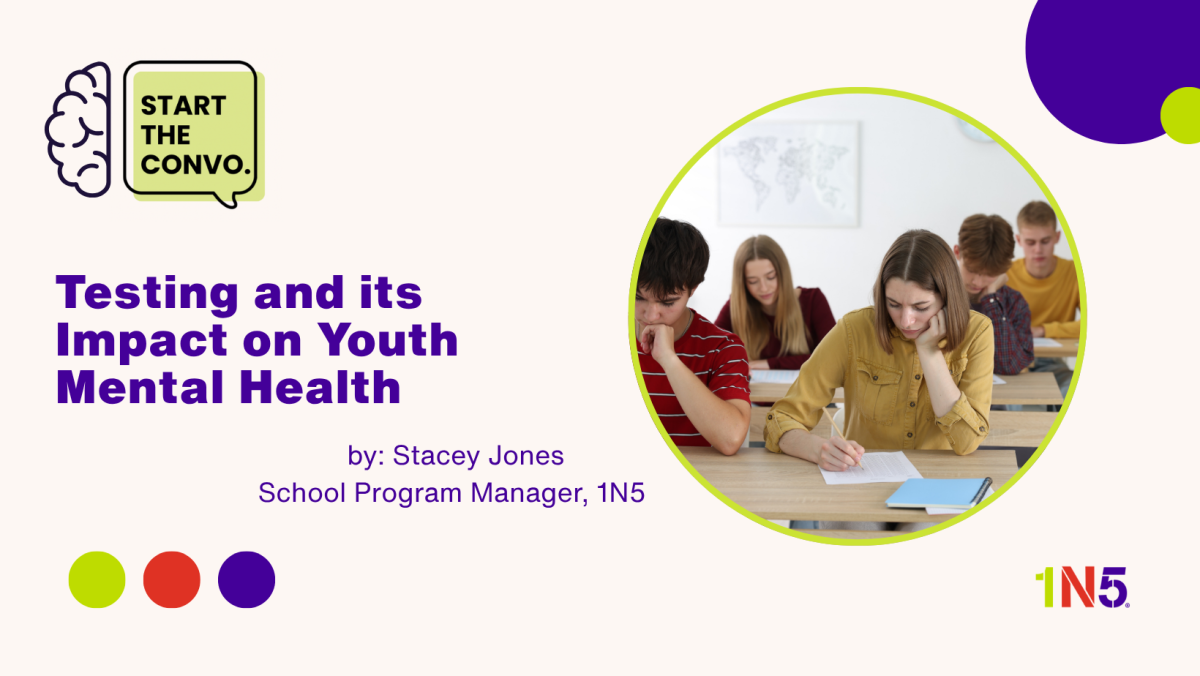
Ready or not, testing season is here and with it often comes stress, anxiety, sleepless nights, and self esteem concerns for our youth.
The American Psychological Association (APA) reports that approximately 45% of students in the United States experience test anxiety. And while testing has been around for decades, the frequency and outcomes have changed vastly just in the past few years.
While we often correlate testing with high school and college-aged students, it typically begins as young as third grade in the United States.
One elementary study from 2005 shared that “Teachers and parents report that high-stakes tests lead to higher levels of anxiety and lower levels of confidence on the part of elementary students.” Moreover, parents’ larger concern was that “high-stakes testing causes damage to children’s self-esteem, overall morale, and love of learning.”
One third-grade student spoke with 1N5, stating that “Testing makes me nervous because I’m scared that I will mess up. I try to go to sleep early, and I eat a good breakfast that my daddy makes, but we talk about tests so much at school that I guess I have to do well.”
A similar mindset is in the higher grades as well.
“When I take a test, it puts a lot of pressure on me as someone who overthinks everything. Something I try to do before a test is breathe and say little positive things to myself. I try to push out the bad thoughts,” said sophomore Serenity Roll.
Serenity isn’t alone in feeling that testing pressure impacts her thoughts. In fact, the California Learning Resource Network found that test anxiety often led to poor study habits, reduced test scores, reduced motivation, absenteeism, and poor self-esteem.
While education is a must and testing remains a requirement, how can we protect the mental health of today’s youth during testing season?
First, adults can model coping mechanisms for today’s youth, whether that be mindful breathing or positive self-talk. Make this part of the testing day routine so that students go into testing with a healthier mindset. You might also consider changing the script about testing. For example, use words of encouragement such as “I’m excited for you to get a chance to show all that you’ve learned.” This reframes the fear that testing is a negative experience.
Educators can also aid in fostering stronger mental health during testing by creating an environment where students feel safe, capable, and confident. This may look like offering fidgets, mints, words of affirmation, extra pencils and paper, a soft voice, ambient lighting, or perhaps even a “You did your best!” mini celebration.
For youth, try setting up healthier habits such as eating a nutritious meal and getting 8-10 hours of sleep before a testing day. Consider not cramming the night before a test. Oftentimes, cramming will lead to less sleep and, therefore, more anxiety.
Despite best efforts, testing can still bring on unwanted pressure, but youth are resilient and have the capability to use coping strategies for stress and anxiety regardless of their age, grade, or IQ. While testing may be here to stay, supporting students before, during, and after testing can become the new norm. Let’s build confidence, mindfulness, and resiliency so that testing doesn’t have to forever mean stressing.