
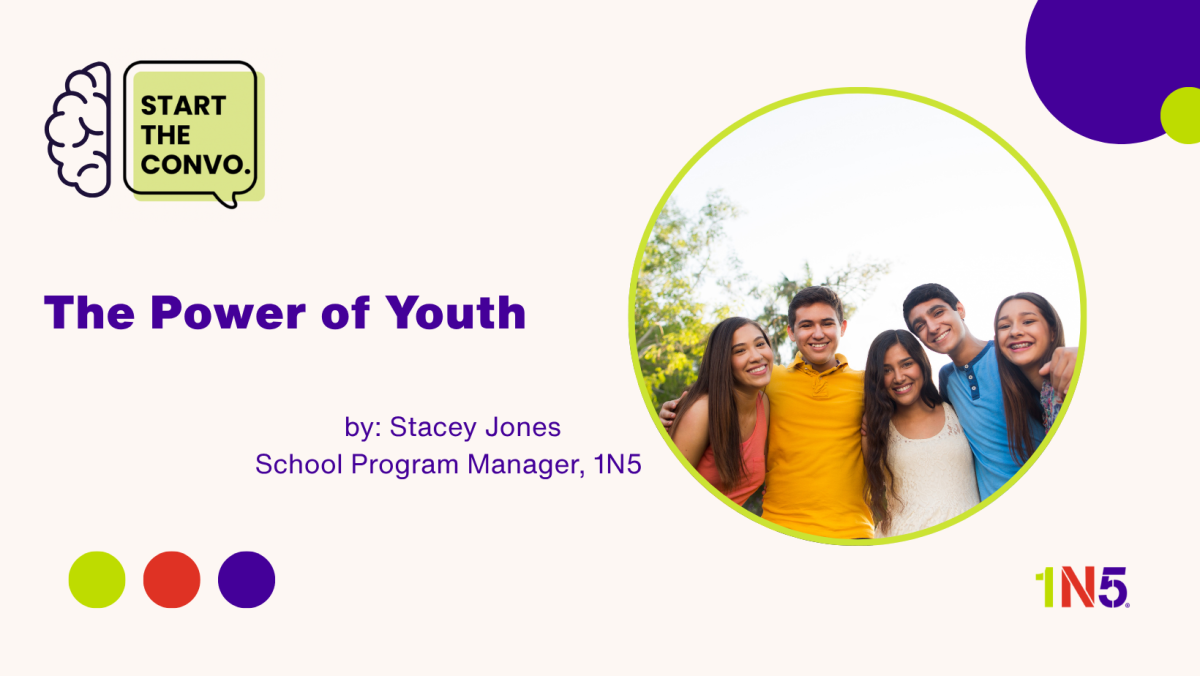
If you have ever doubted today’s youth, I’m here to tell you that you need not worry. How do I know? Well, along with my rockstar school program team here at 1N5, I get to visit schools all over the Cincinnati and Northern Kentucky areas to teach students, staff, parents, and caregivers about mental health. In doing so, I get a front-row seat to today’s youth, and let me shout it from the rooftops: Today’s youth is changing the mental health game!
Each week, 1N5 gets calls and requests to come and speak at schools. Specifically, we partner with local schools and universities to normalize mental health and break down the barriers preventing our youth from seeking help. With that, we know that every school and student is unique, so there is no one-size-fits-all model. We work with administrators, counselors, and teachers on a needs assessment to better understand the school environment. Based on this information, 1N5 creates a customized long-term strategic plan pulling from our comprehensive list of evidence-based programs with proper mental health professional support in place for each school. In other words, we care tremendously about being intentional so that we can meet these students where they are.
When sharing what we do with those outside of the education system, we often hear things like, “Wow! That must be hard work,” or “I bet you’ve seen it all,” or “That must be heavy”. My response to these remarks is always filled with correction, gratitude, and examples of my personal awe in today’s youth. In fact, I’d go as far as to say that all grades are doing powerful work and using their voices to change the game in mental health, and I think we could all take notes from them.
For example, one rural elementary school recently held a career fair, and the students had no problem listing coping skills such as mindful breathing and taking a break when a test might cause them anxiety or a sibling takes their favorite toy, which results in anger. Many of these same students shared that they had feelings posters in their schools and fidget toys at home to help regulate their big emotions.
In another instance, I received a note from a junior high student on the Westside of Cincinnati that shared how helpful their training was with 1N5 because now they knew that they weren’t alone in their own personal mental health struggles. The same student was excited to share what they had learned with family members at home. As a millennial, I am constantly reminded of the stigma surrounding mental health while growing up and the lack of education at the time. I would have never thought to have such powerful conversations with my family members, but how powerful and refreshing it is to hear that today’s youth are doing just that.
Perhaps most memorable was a high school student who shared their personal desire to use positive self-talk and mental courage in sharing a personal struggle with their school counselor. This youth knew that what was negatively impacting their mental health would only get worse without asking for help. The vulnerability and bravery that the student used to stop the stigma right there in that moment were incredibly inspiring.
And so, it seems we often think that youth don’t listen or care about what older generations have to say, but I think we are incorrect there. In fact, today’s youth are listening and watching more than ever. Even more impressive, they are open to talking about things that are hard or may be difficult to discuss. And above all, they have wonderfully loud voices that are paving the way for healthier conversations to be had and help-seeking to take place.
Today’s schools even have youth-led peer support groups that invest daily in the mental health of their student body. They’re talking, doing, and acting more than we ever did at their age, so let’s take notes and give applause where it’s deserved.
Still not convinced? Then I challenge you to ask for an invitation to your nearest school so you can witness today’s youth and the power they hold when talking about mental health prevention.
I would be remiss if I did not take a moment to acknowledge and give praise to the educators, administrators, and parents who are raising this generation to have these hard but necessary conversations. Let’s keep the conversation going and shut down the stigma surrounding mental health.