
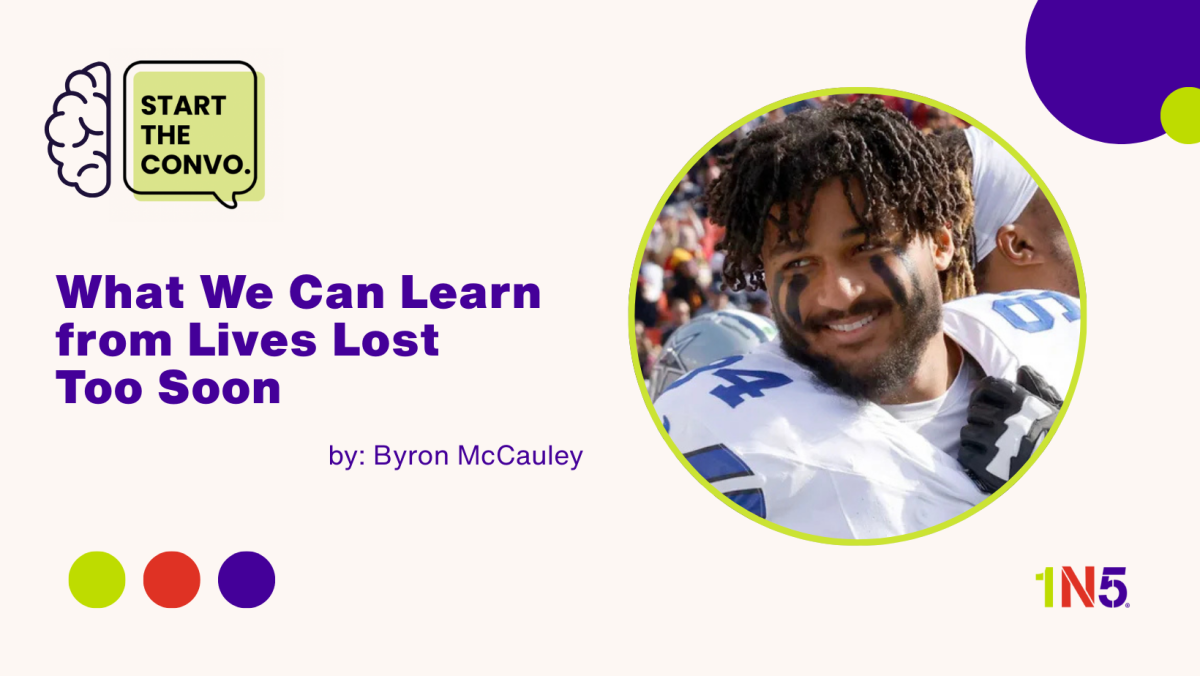
TV cameras captured players waving a huge flag emblazoned with the number 94 on the sideline of a late-November Dallas Cowboys football game. The Cowboys mounted a comeback win from 21 points down against the Philadelphia Eagles, perhaps powered by extra motivation. Number 94 belonged to rookie player Marshawn Kneeland, who was found near AT&T Stadium on Nov. 6. He appeared to have died by an apparent suicide. Clearly, Kneeland’s accomplishments belied what was going on inside. His death at 23 was sudden and unexpected to those who knew him. I did not know Marshawn, but I know the feeling his family must be going through.
Years ago, my Aunt Geraldine took her own life. No goodbye. Just an aching absence that rippled across our family. During the pandemic, a man in my neighborhood died in his bedroom, an apparent suicide. The night it happened, four police cars sat silently outside, no flashing lights, no urgency, only the quiet stillness that follows tragedy. He was a computer engineer, neighbors said. His parents flew in from California to gather his things. I watched his brothers carry pieces of a life they would never fully understand again.
The Cowboys’ Kneeland was a rising star, having scored a touchdown a week before his death – rare for a defensive player. However, too often, public moments of triumph reveal little about the private battles someone may be fighting.
Both men were young, but tragically, in 2021, suicide was the second leading cause of death for ages 10-14.
In Ohio, the suicide rate is nearly 15 per 100,000 citizens, 58 percent involving firearms. There is a measure of comfort that Ohio is actively addressing the issue statewide, coordinated by the Ohio Suicide Prevention Foundation. And we can do more than throw our hands up in exasperation. Start by learning the signs: withdrawing from loved ones, changes in sleep or appetite, giving away possessions, expressing hopelessness, or suddenly appearing “at peace” after a long struggle. Sometimes it’s a subtle shift – a quietness that feels different, a change in routine, a tone in someone’s voice that tells you something deeper is going on.
For some, the holidays stir old wounds and amplify loneliness, so checking in matters. A call. A private conversation. A genuine “How are you, really?”
You don’t have to be a therapist to save a life. You just have to notice. You just have to care. If you want to learn how to recognize warning signs and support someone who may be struggling, 1N5 offers QPR Suicide Prevention Gatekeeper Training. QPR—Question, Persuade, Refer—teaches simple, actionable steps anyone can use to help save a life. To learn more or sign up for an upcoming virtual training, visit: https://1n5.org/qpr-gatekeeper-suicide-prevention-program-virtual/